Fields & irrigation
Soil tension by zone, the pump against its permit, and a frost warning that wakes the right phone.
Any Ontario farm taking more than 50,000 litres a day runs under a Permit to Take Water. The permit can cost $10,000 to $50,000 in impact assessment to get, sets a maximum rate and a daily volume, and wants a daily log reported every March 31. In a Level 2 summer the conservation authority asks for a 20 per cent cut and tells everyone to check for leaks. OMAFRA and McGill's probe trials on Norfolk and Leamington farms found most growers lack the time to read the data, so timing is still a shovel and a look at the sky, and the traveller runs while the log stays empty.
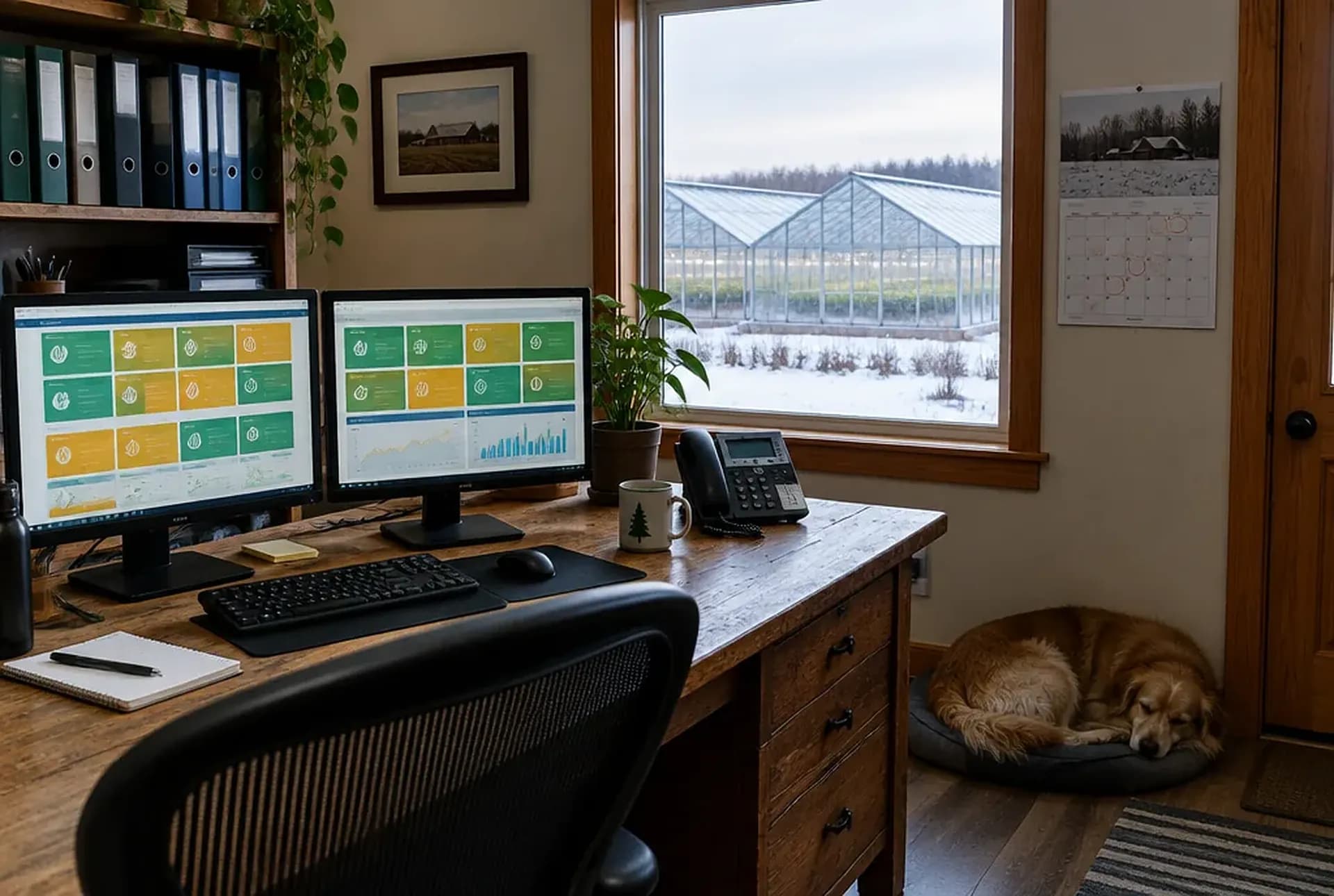
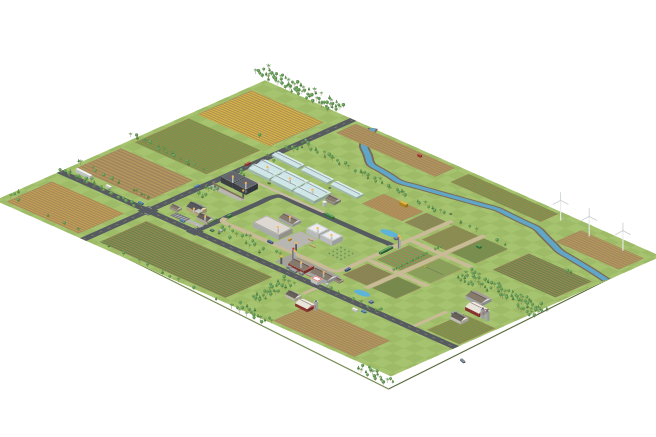
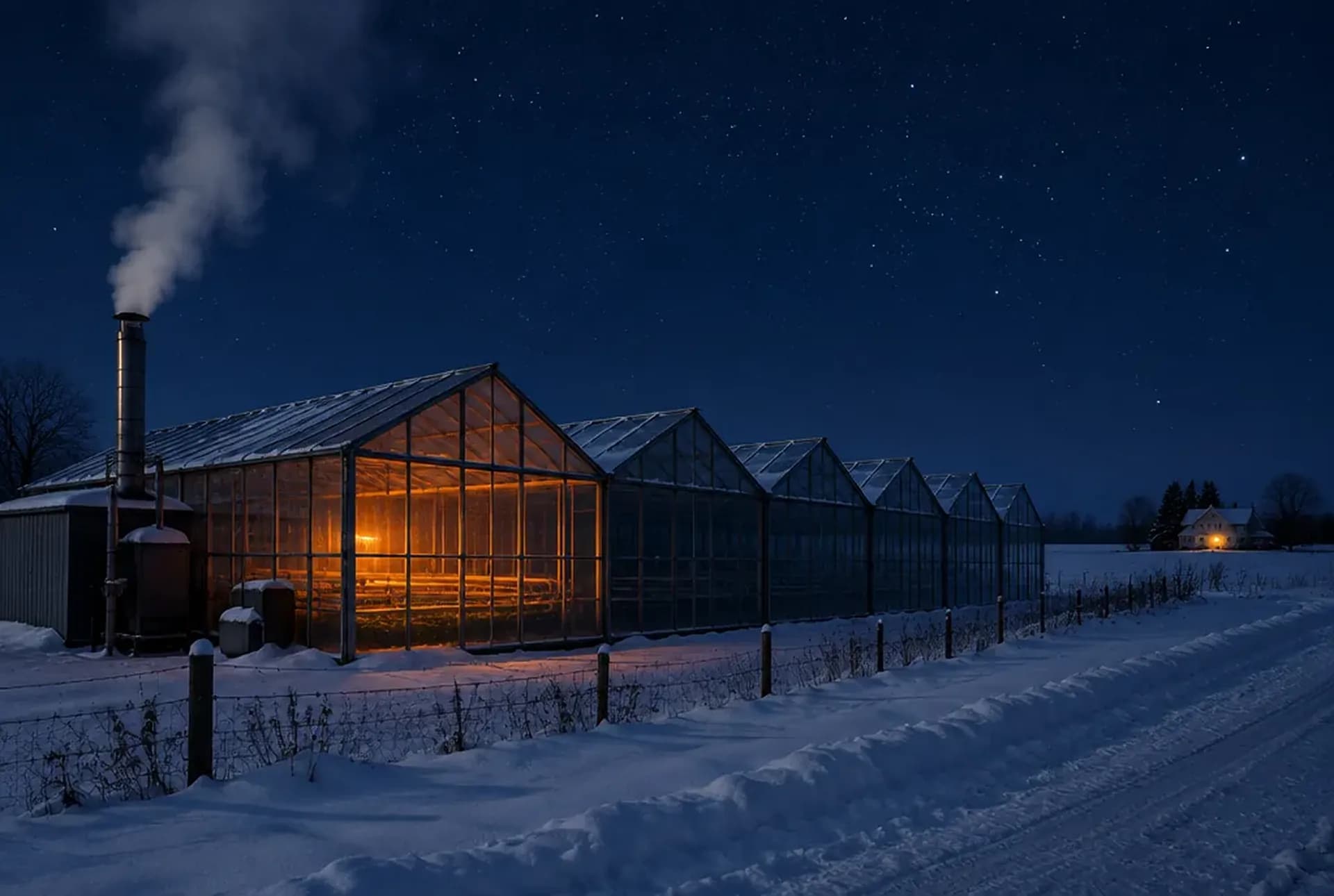
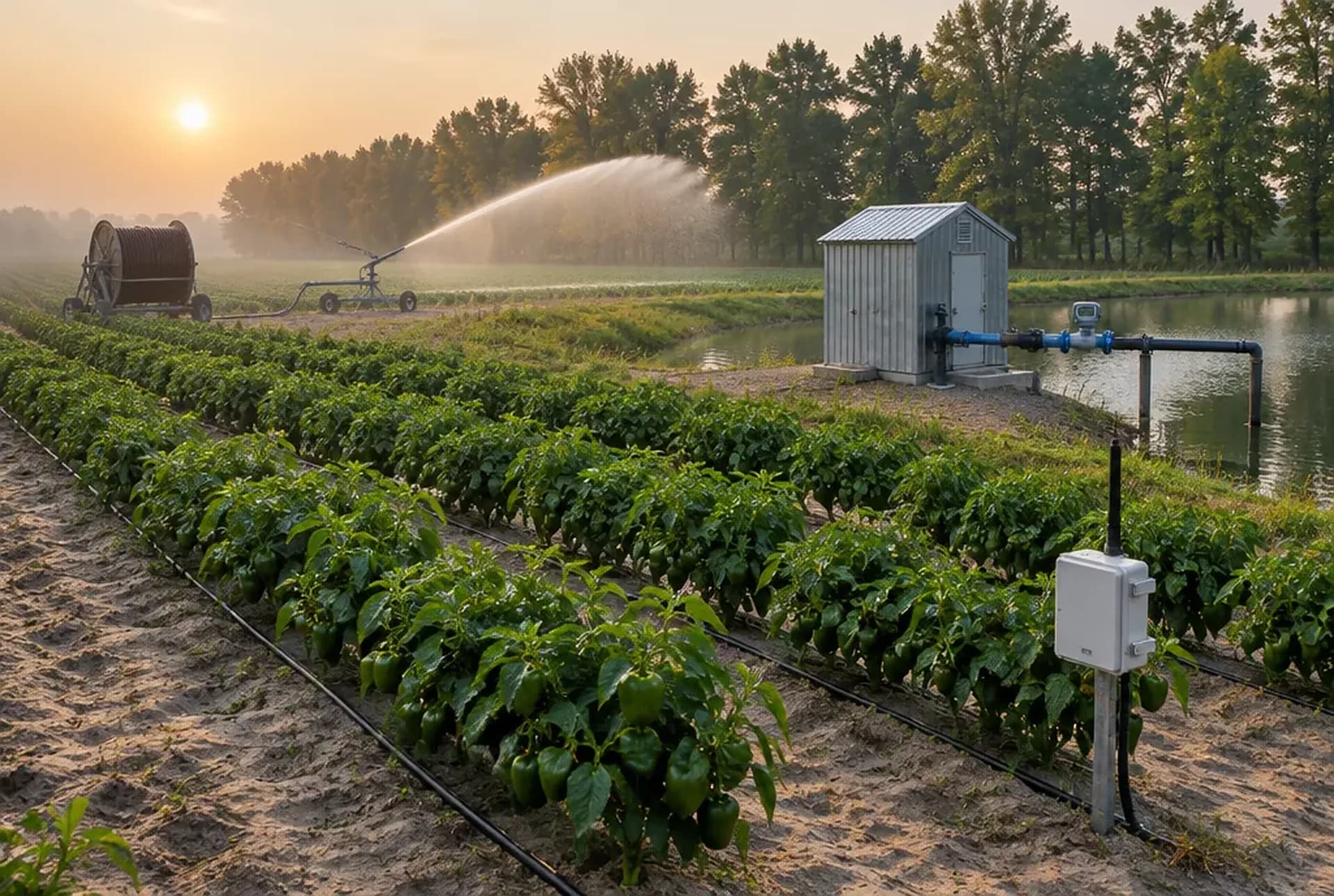
Tension probes at 20 and 40 centimetres colour each zone on the map, and the pump house reports litres today against the permit's own maximum, with the daily record written from the flow meter. When Zone 3 crosses its threshold the dashboard proposes a night run that stays inside the permit and the reduction target, and the irrigation lead gets it on his phone in Spanish. Flow with no schedule running at 03:40 is a leak alert, not a mystery in the March 31 log. A frost alert in May reaches the phone before the transplants feel it. The water saved is logged from the meter, never estimated.
- Soil tension by zone and depth
- Litres today against the permit
- Flow with no schedule running
- Rain gauge and ET forecast
- Frost and inversion alerts
- Spray records with REI and PHI
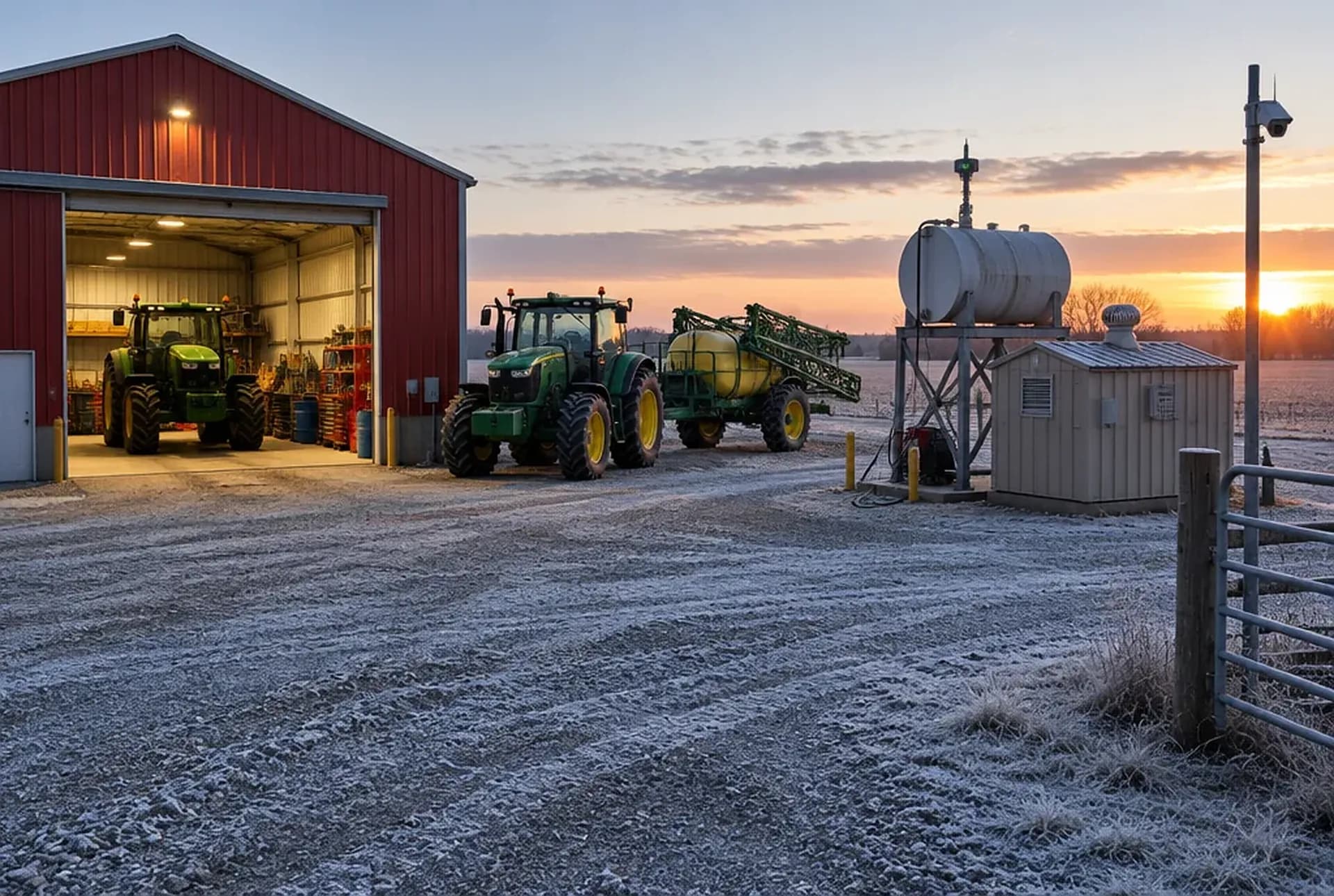
- Hard-hose traveller and drip zones
- Irrigation pump and flow meter
- Tension and capacitance probes
- On-farm weather station
- Auto-steer tractor and sprayer
- Scouting drone