Service Industry

A connected restaurant.
A better Friday.

Your people know how to run a service. Give them one clear view of the whole restaurant, from the back door to the bank deposit.

Bring the floor, the line, the walk-in, the delivery tablets, the patio and the close into one working picture, built around the POS, the equipment and the expertise you already have. The POS still rings the orders. Your chef still runs the pass. What changes is how fast the right person hears about the right thing.

Step inside the restaurant
  • Full-service restaurants
  • Cafés & bakeries
  • Pubs & taprooms
  • Quick service
  • Caterers
  • Ghost kitchens
The whole restaurant, in context

From the host stand
to the back lane.

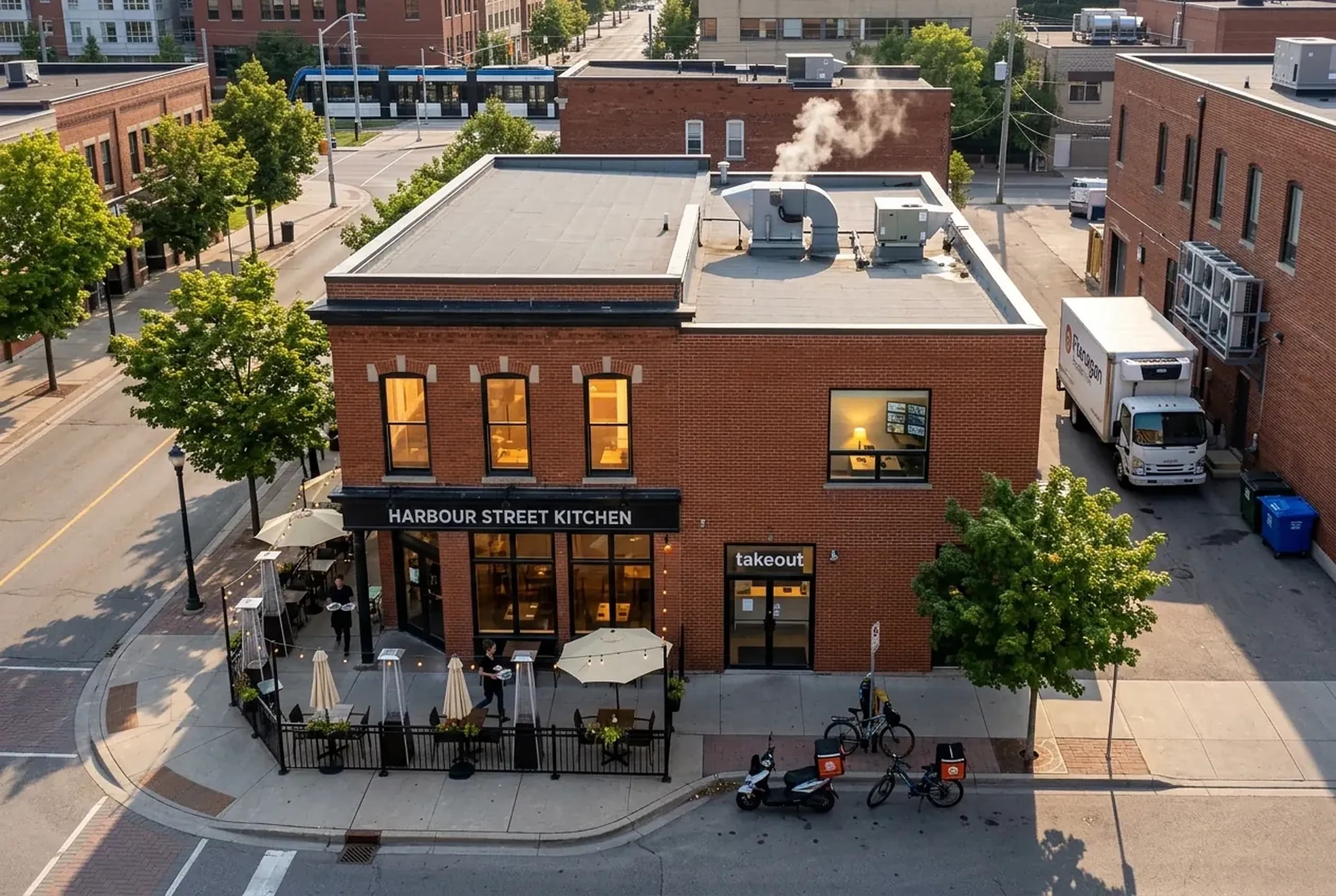
Aerial view of Harbour Street Kitchen: a red-brick corner restaurant in downtown Kitchener with a sidewalk patio under string lights, a takeout door with delivery scooters, the kitchen roof with its exhaust fan, the back lane with a delivery truck and walk-in condensers, and a lit office window upstairs

Hover for an idea · click to explore

Watch the resolution, step by step

Here's how we'd handle it.

This walkthrough follows a real scenario built into our interactive demo. It shows the evidence, the decisions and the follow-through — not just an impressive-looking dashboard.

The walk-in at 01:1401 / 06
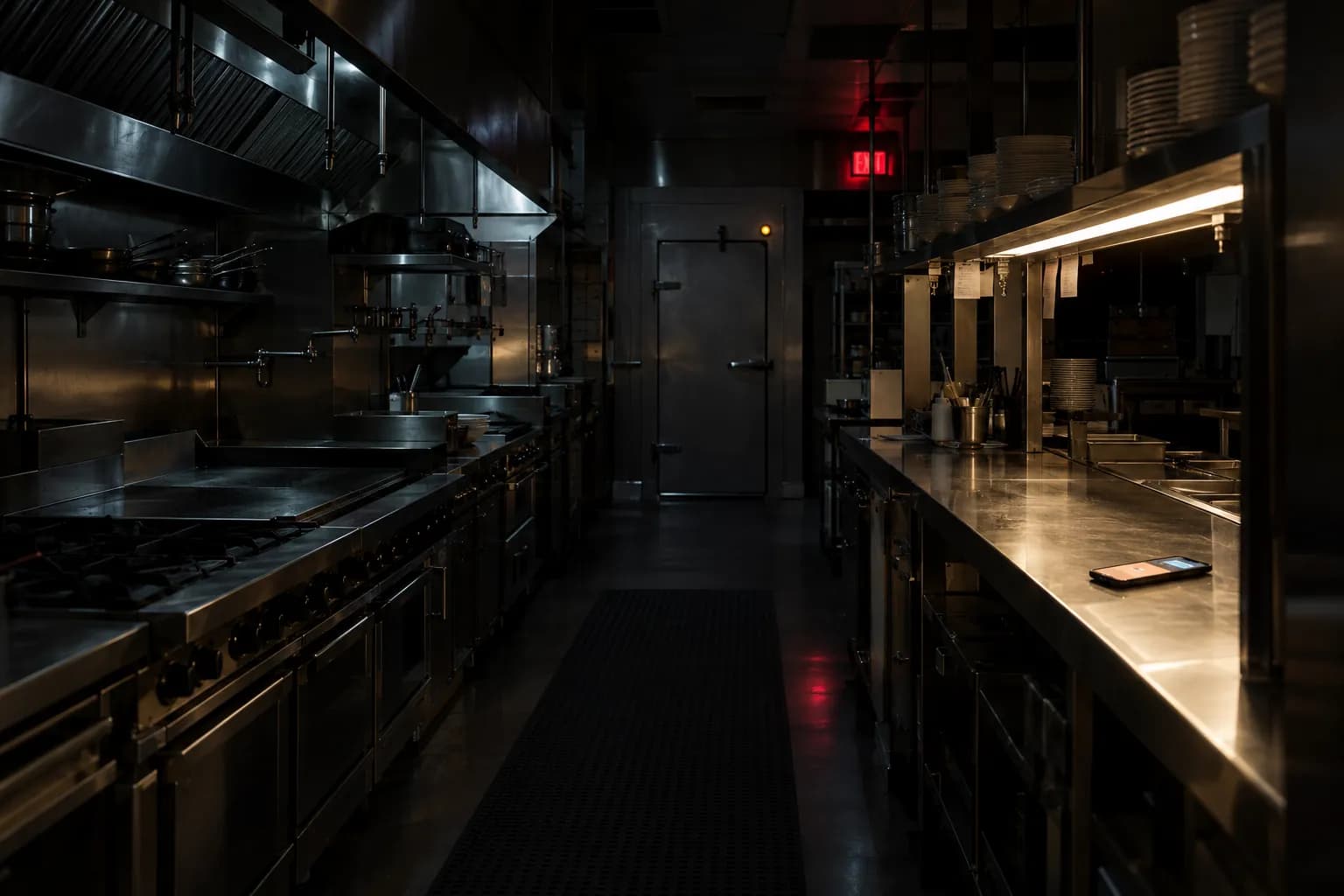
A dark restaurant kitchen at 01:14, the walk-in door shut, a phone on the pass lit with a single alert
Guided story · illustrative operation

What happens next

01:14. The walk-in is rising

This is last night, replayed from the log. Marcus, the sous-chef who closes, locked up at 00:40. At 01:14 the walk-in air reads 3.4 °C, up 1.5 °C in 45 minutes, with the door shut and the condensing unit drawing zero current. The dashboard did not wait for 4 °C; it fired on the climb, while the product inside is still cold, and sent one notification to you and one to Marcus with a single button to acknowledge. Click the walk-in alert. Last winter the same failure was found at 07:00, when the opener pulled the door on warm product.

The underlying problem

A loaded walk-in starts losing cold after close and nobody knows until the opener pulls the door at 07:00. By then the product has been in the danger zone for hours, the night call-out runs roughly $200 to $300 an hour, and the inspector's first question is where the log is.

You learn at 01:14 instead of 07:00, the product that can be saved is saved, and the corrective action is documented without a clipboard. The contactor still fails and the technician still costs money.

Try this exact scenario in the real demo ↗

Fictional operation and simulated incidents. Human decisions and technical integrations depend on each client's actual systems.

Most of it is found one shift too late.

A warm walk-in.
A short deposit.
An 8-top that never came.

Someone opens the walk-in at 07:00 and finds out what happened at 01:00. The DoorDash payout lands $192 short and nobody knows which orders. The host wrote the Saturday 8-top in the book, and the table sat empty while you turned people away at the door.

Connect the reading to the place, the person and the next step. The rising walk-in rings the closer while the product is still under 4 °C. The clawback shows up beside the chit that caused it. The reminder goes out with a cancel link and the card is on file. Your team spends more of the night cooking and serving, and less of it finding out what happened.

The host stand
The line
The walk-in
The pass
One connected view

Every part of the operation

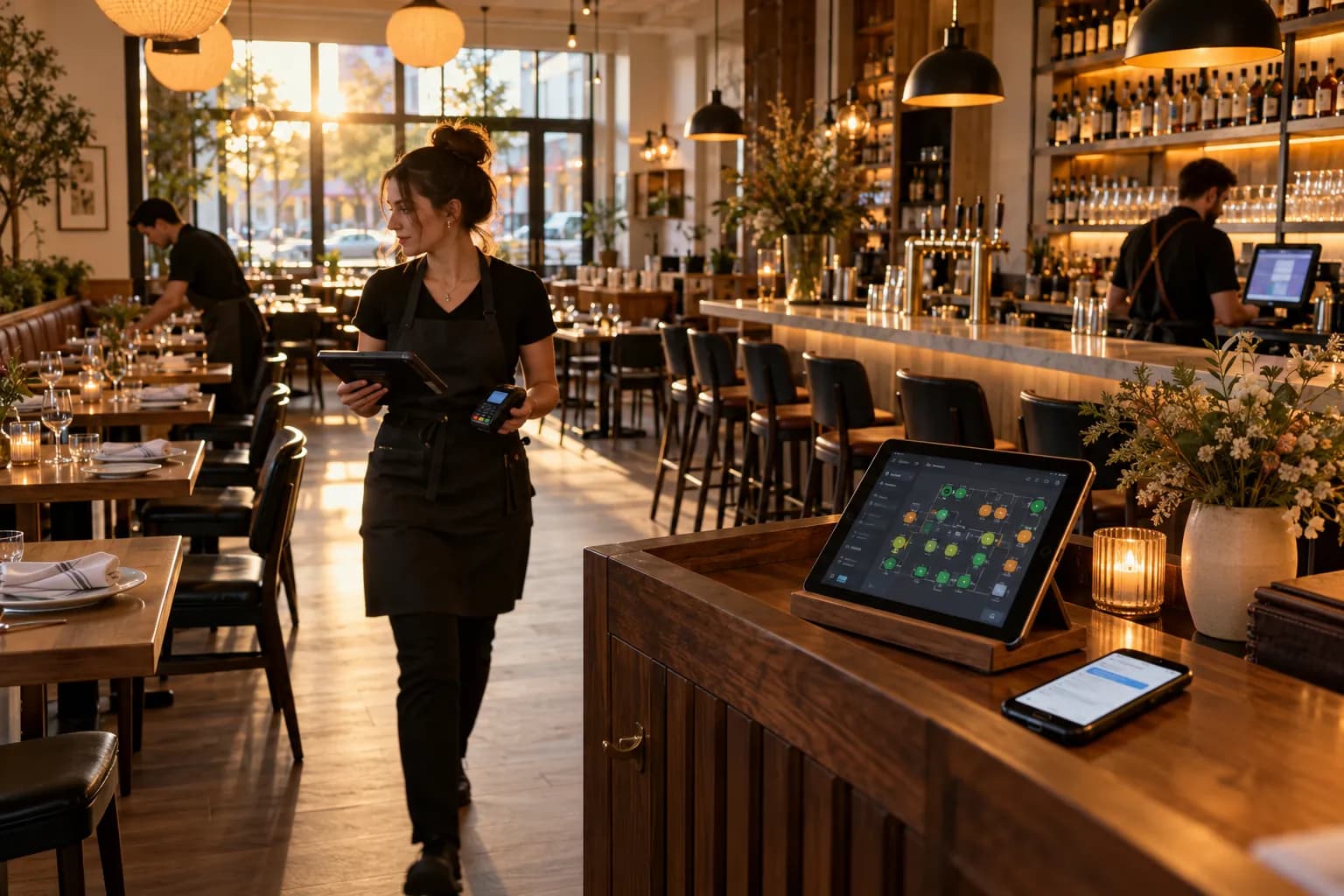
The dining room before service: a host stand with a tablet floor plan, a server carrying a handheld, the bar along the back wall and tables set under pendant lights
The floor

Front of house & POS

Bookings that get confirmed, a phone that gets answered, and pin pads that keep working when the modem does not.

The average no-show never hurts. The Saturday 8-top does: $400 to $600 of revenue and a table you refused walk-ins for. Resos counted a 2.98 per cent no-show rate across Canadian bookings on its platform; counting late cancels, restaurants run anywhere from 3 to 15 per cent. The phone rings for bookings during the rush and goes to voicemail. The POS, the pin pads, three delivery tablets and the guest Wi-Fi share one consumer modem, so a reboot mid-service takes the patio handhelds with it, and Interac debit never works offline. At close, the cash-outs and the tip sheet are done on a napkin.

Tonight's covers show booked, confirmed, at risk and no-showed, with a card on file for parties of six or more and a reminder with a cancel link, which CASL treats as transactional. An AI phone and web agent answers the hours-and-menu calls, takes bookings and catering enquiries, and hands anyone who asks to the host. The network is segmented: guests cannot reach the pin pads, an internet drop fails over to LTE in seconds and tells the owner, and the processor's own LTE terminals keep cards working. Covers per hour, quoted against actual wait, and sales per labour hour sit on the manager's phone, not in the office.

On the dashboard
  • Bookings by status: booked, confirmed, at risk, no-show
  • Quoted vs actual wait, walk-aways
  • Covers per hour and table turn
  • Calls answered by the agent vs handed off
  • Pin pad uptime and offline transactions
  • Over/short by server at close
Equipment it connects
  • Cloud POS (Square, Lightspeed, TouchBistro, Clover)
  • LTE pin pads (Moneris Go, Clover Flex)
  • Reservation and waitlist system with SMS reminders
  • Host stand screen with floor plan
  • UniFi gateway, VLANs and guest Wi-Fi APs
  • VoIP line and AI phone/web agent
Open this area in the demo
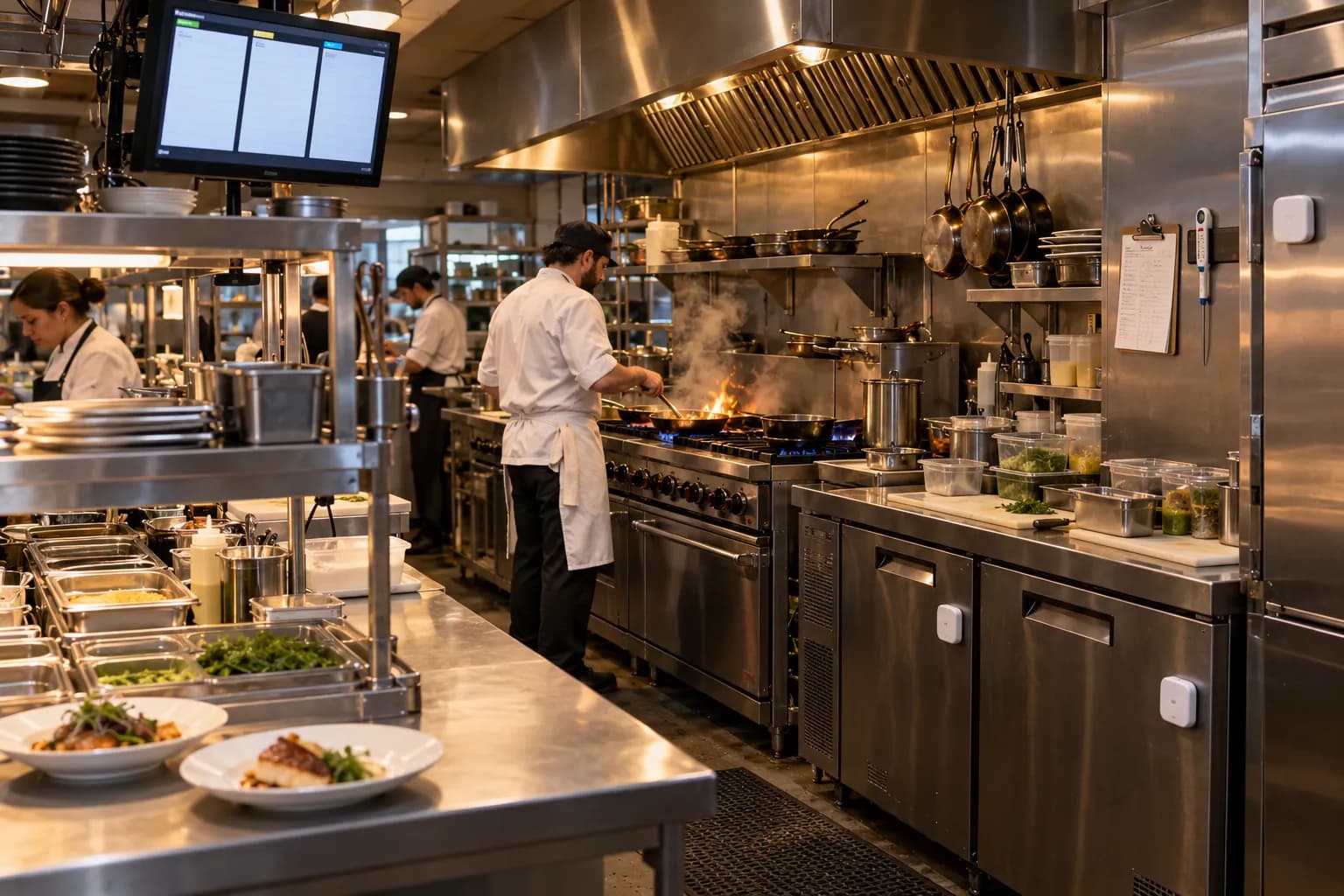
The kitchen line at the start of service: the pass with a kitchen display screen, a cook at the sauté station, lowboys with small wireless sensors, the hood above the range
The line

The kitchen line & prep

Tickets by station, temperatures that log themselves, and the hood sticker turned into a date the dashboard knows.

O. Reg. 493/17 wants hazardous food at 4 °C or below or 60 °C or above and a certified handler on the premises every operating hour. The inspector arrives without notice and sees the clipboard of hand-written temperature and sanitizer logs first. The hood certificate is a sticker nobody has read, and the suppression tag is semi-annual under NFPA 17A. In Toronto, a DineSafe Conditional Pass stays public for two years and gets a re-inspection within 24 to 48 hours; in Waterloo Region the results go up on the Region's Check it! site. Either way, 65 per cent of Canadian diners say they would avoid a restaurant with a recent warning. The line learns the cook is not coming when it is already behind.

The lowboys and reach-ins on the line report every minute, with door-open time, so the sauté station's warm drawer is a message to the chef, not a Friday surprise. The closing checklist captures the sanitizer strip reading and the probe temperatures on a phone, and the 30-day log the inspector asks for is already a report. Hood cleaning, the suppression tag, extinguishers, the grease-trap manifest and the pest visit sit on one calendar that opens a work order 30 days out with the last certificate attached. Ticket time per station runs beside the schedule, so a cook who has not clocked in by 15:30 becomes an open-shift broadcast at 15:50, not a phone tree.

On the dashboard
  • Ticket time per station, tickets over target
  • Lowboy and reach-in temperatures, door-open minutes
  • Sanitizer ppm per shift or final-rinse temperature
  • Cook and hot-hold probe logs
  • Hood cleaning, suppression tag and extinguisher dates
  • Certified handler on shift
Equipment it connects
  • Kitchen display system at expo and stations
  • Gas ranges, fryers and flat-tops; combi oven
  • Exhaust hood, grease filters and fire suppression (NFPA 96 / 17A)
  • Lowboys and reach-ins with wireless sensors
  • Low-temp chemical dish machine on an Ecolab or Hobart lease
  • Probe thermometers and date/allergen labels
Open this area in the demo
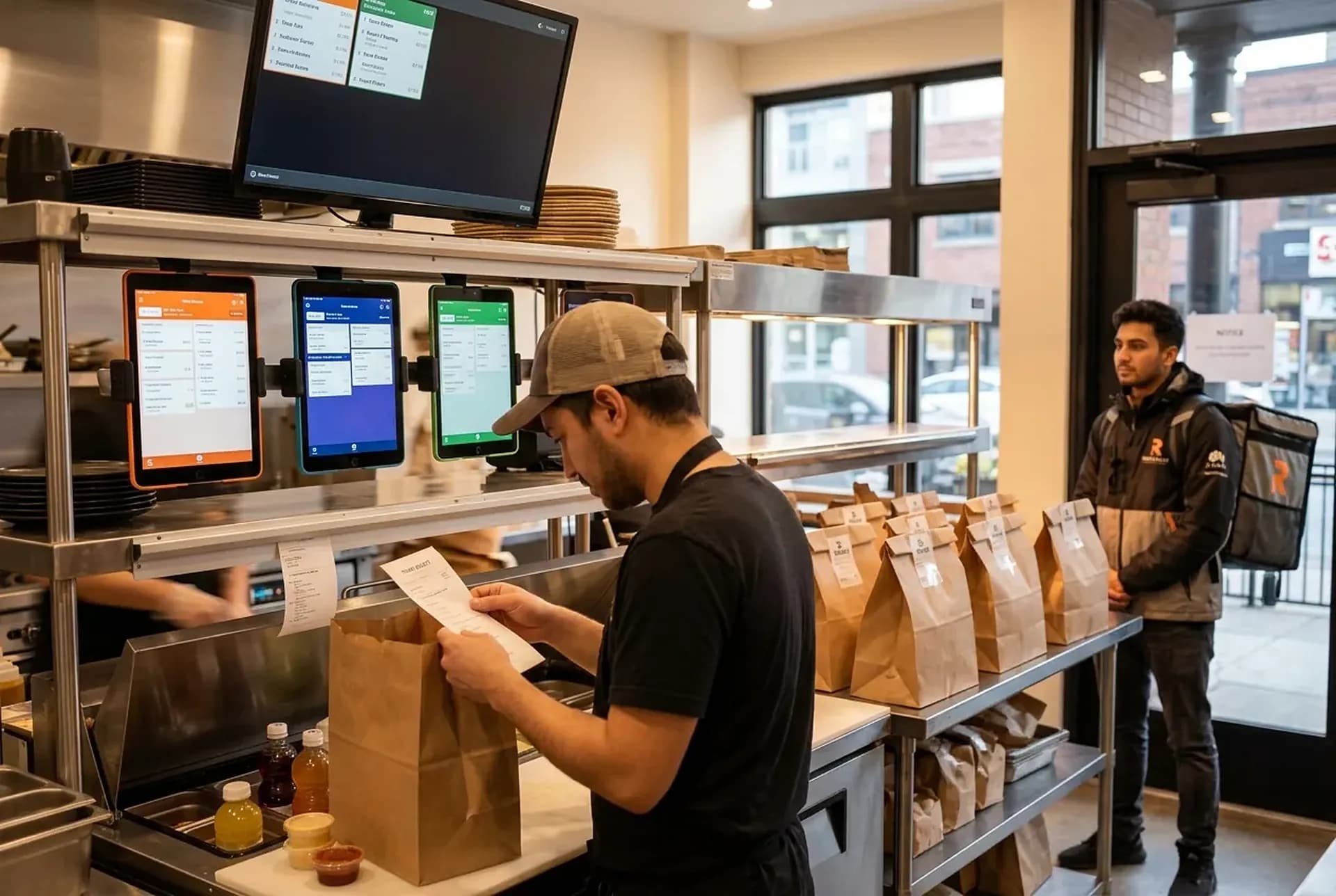
The pass during the Friday peak: three delivery tablets in a row, sealed bags on a heated pickup shelf, an expo checking a chit against a bag
The pass

Delivery & takeout

Three tablets in one feed, one 86 that reaches every menu, and each clawback beside the chit that caused it.

Uber Eats charges 20, 25 or 30 per cent on delivery, DoorDash 20, 25 or 29, and Skip does not publish; on a $30 order that is $6 to $9 before anything else. Each app brings its own tablet, menu and payout statement, and an item 86'd on one keeps selling on the other two. When a guest reports a missing drink, the platform refunds them and takes it from you: on DoorDash, 25 to 100 per cent of the item plus tax, as a negative adjustment that leaves Friday looking fine until the deposit is short. Disputes have windows, about 14 days on DoorDash and 30 on Uber, that nobody tracks.

The three platforms and the direct ordering site feed one screen on the line through the aggregator or the POS integration, and one 86 takes the item off every menu. A bag-check step at expo lists the drinks and sauces for each order and has to be ticked. Every error charge lands beside its chit, with the substitution line and whether the bag was checked, and the ones worth disputing go into a queue with their deadline. The weekly reconciliation shows expected against deposited per platform, net margin per channel and dollars clawed back per 100 orders. Accuracy gets better over weeks, as the bag check becomes habit.

On the dashboard
  • Orders and net margin per channel
  • Error charges and refunds per 100 orders
  • Disputes open vs deadline
  • Prep-to-ready vs promised time, driver wait
  • Menu sync and 86'd items across platforms
  • Payout variance: expected vs deposited
Equipment it connects
  • Uber Eats, DoorDash and Skip tablets, or an aggregator (Deliverect, Otter)
  • Direct ordering site with pickup slots
  • Pickup shelf and order-ready display
  • Bag sealing, labels and the expo checklist
  • Platform merchant portals and payout reports
  • Compliant packaging under the single-use plastics ban
Open this area in the demo
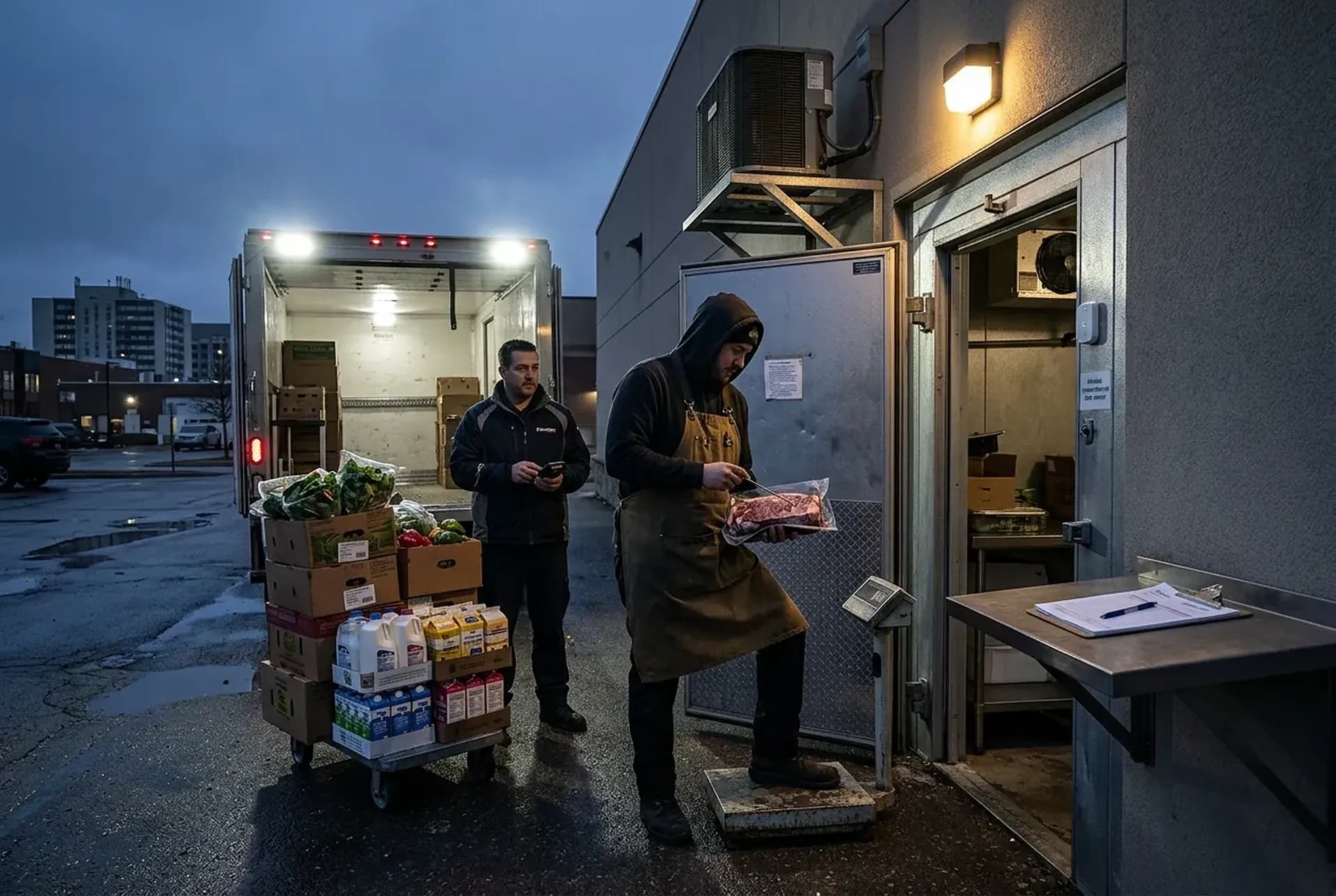
Receiving before sunrise: an opener probing a case of striploin on a scale at the back door, the walk-in door open with a sensor on the frame, cases on a dolly
Back of house

Inventory, suppliers & cold storage

A walk-in that rings the closer while the product is still under 4 °C, and a case price that shows up the day it lands.

Industry practice is to log the walk-in by hand twice a day, so a failure at 23:00 is found at 07:00, when the product has been in the danger zone for hours and public-health guidance says discard after two. The night-time failure is rarely a dead compressor: an iced evaporator, a fan motor, a contactor, low charge, or a door propped during the beer delivery. A condensing unit runs $4,000 to $9,000, an after-hours call roughly $200 to $300 an hour plus parts. The opener signs for short-ships at 07:00. Beef sits 23 per cent above its five-year average, and invoices keyed by hand surface a case-price change weeks later.

Wireless temperature and door sensors and a current clamp on the condensing unit stream a reading a minute, with delay and time-of-day logic so defrost cycles and the beer delivery do not cry wolf. A rise of 2 °C in an hour with the compressor at zero amps pages the closer and the owner while the air is still at 3 °C, and the work order to the refrigeration contractor is drafted with the trace attached, one tap from sent. Tuesday's short-cycling becomes a scheduled daytime visit. Invoice capture from Flanagan, Sysco and GFS posts the per-case change the day it is received, with the plates it touches and their new margin.

On the dashboard
  • Unit temperature per minute, rate of rise
  • Compressor current, short-cycling, power loss
  • Door-open minutes during service and deliveries
  • Receiving temperatures and short-shipped lines
  • Per-SKU invoice price change, tariff-exposed items
  • Food cost by week after the count, waste by reason
Equipment it connects
  • Walk-in cooler and freezer with wireless sensors (SmartSense, Monnit, Testo class)
  • Current clamp on the condensing unit
  • UPS on the sensor gateway and router
  • Receiving scale and probe thermometer
  • Invoice capture (MarketMan, Optimum Control, Dext)
  • Supplier portals: Flanagan, Sysco, GFS
Open this area in the demo
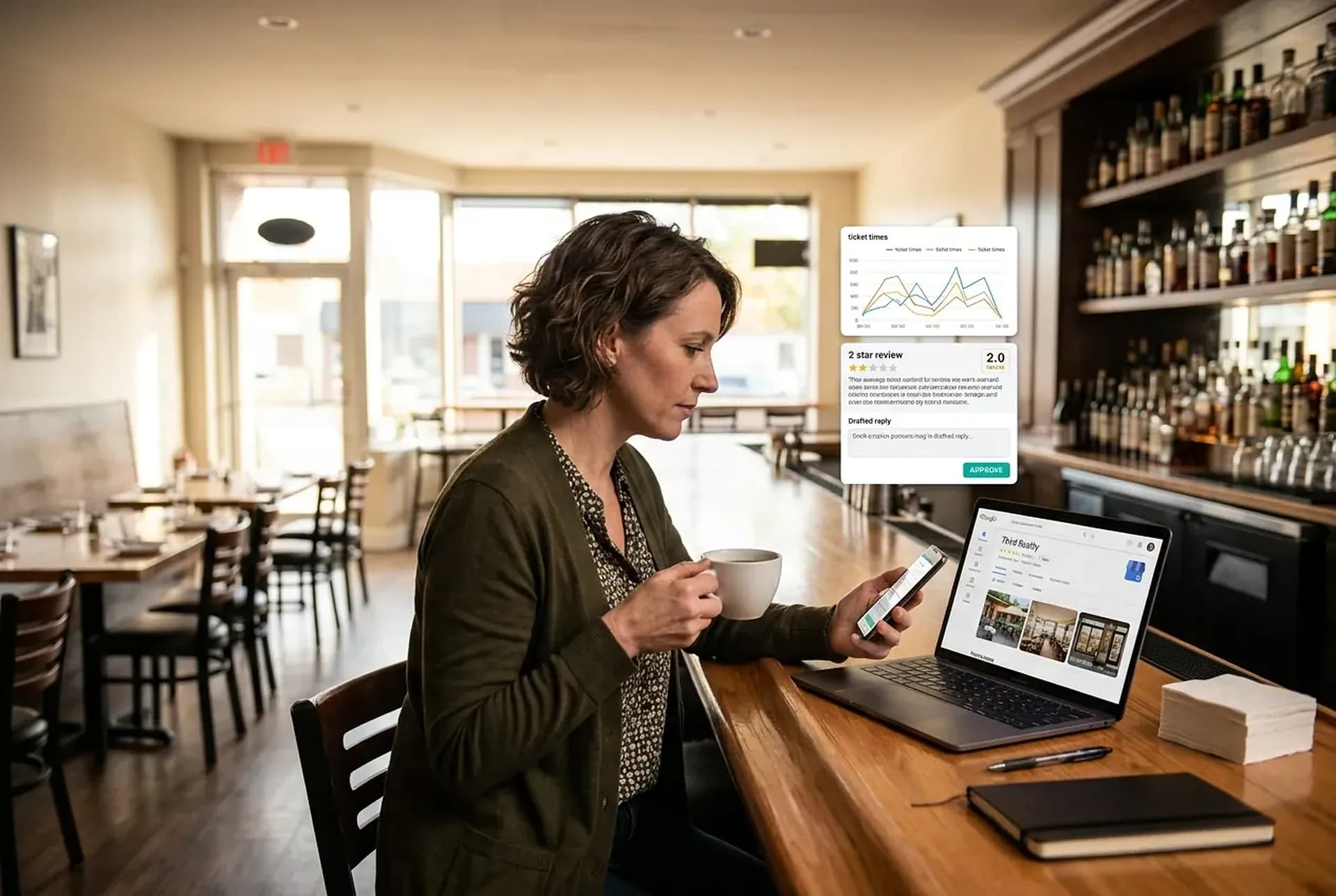
The owner at the end of the bar with a phone showing a review beside the shift it came from, a drafted reply ready to approve, the dining room behind
The front door

Marketing, reviews & loyalty

A review that arrives beside the shift it came from, a reply you would actually send, and offers that go only to guests who asked.

Before anyone books, they look you up: 35 per cent of Canadian diners checked Google reviews in the last three months and 88 per cent check social media. A bad Saturday becomes a two-star review by Sunday, answered when the owner finds a minute, with no link to the shift behind it. Loyalty is growing, 42 per cent of diners from 29 a year earlier, and the program in your POS is still not set up. A Google reviewer is pseudonymous: you can match a review to a shift, never to a ticket. And every offer has a rulebook: CASL for promotions, PIPEDA for the data, Law 25 in Quebec.

A new review arrives on the owner's phone beside the shift it came from: wait quotes, staffing, station ticket times for that night, and a drafted personal reply to approve or rewrite. Delivery-platform ratings, which are order-linked, land beside the order. Repeat themes become a line on the weekly report instead of a feeling. The loyalty program lives in the POS with a consent record per member, so a win-back offer goes only to guests who signed up and said yes, through the channel they chose, and the December party menu reaches the people who asked to hear about it. Ratings move slowly, and only if the room does.

On the dashboard
  • New reviews by platform, star trend, themes
  • Unanswered reviews and response time
  • Review matched to date and shift
  • Loyalty sign-ups, redemptions, consent status
  • Promotion redemptions and attributed revenue
  • Profile actions: calls, directions, orders
Equipment it connects
  • Google Business Profile, Meta and a current website
  • Review monitoring with reply drafts for owner approval
  • POS-integrated loyalty and gift cards with consent records
  • Email and SMS campaigns with CASL unsubscribe handling
  • Local listings sync and current photos
  • Public inspection result monitoring
Open this area in the demo
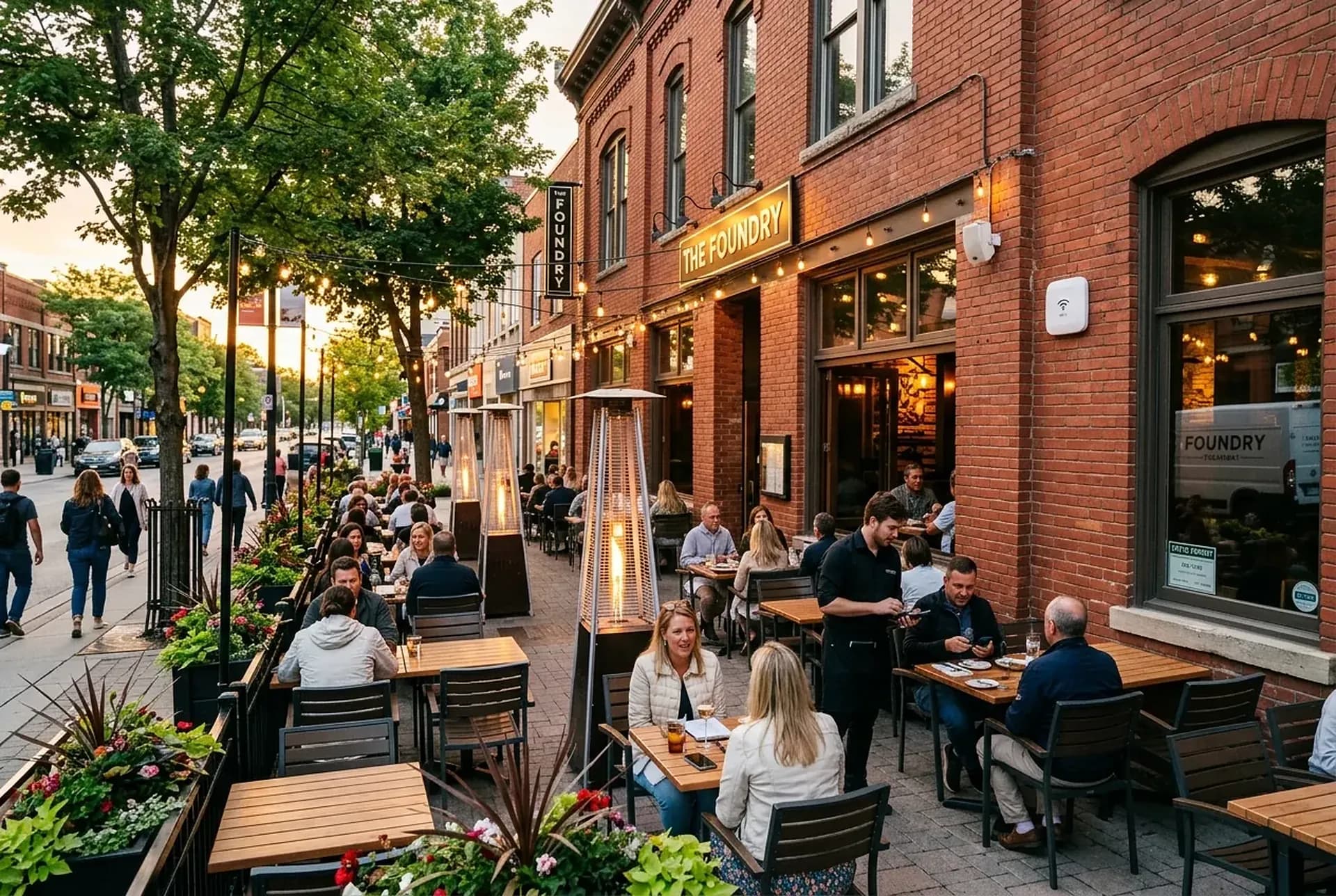
The sidewalk patio on a clear evening: tables under string lights and patio heaters, a server with a handheld at a far table, an outdoor access point on the wall, the catering van at the end of the block
Outside & off-site

Patio, events & catering

The season's paperwork in one window, 60 seats that come and go with the forecast, and a catering job delivered with a temperature record.

The patio permit, the insurance certificate, the AGCO patio extension and the platform build land in one spring window. In Toronto, CaféTO moved to full cost recovery in 2025: a $977.45 application plus $44.14 a square metre on the sidewalk or $132.42 in the curb lane, now frozen to 2029. Capacity jumps 60 seats on a clear Friday and a 70 per cent rain chance takes them back on Saturday. Catering is the growth pocket, and it runs out of an email thread: a 50 per cent e-Transfer deposit, a Special Occasion Permit, hot boxes holding 60 °C across town, and a BEO that reaches the kitchen on the day.

Permit, insurance and AGCO dates sit on the same calendar as the hood and the suppression tag, and the insurance renewal becomes a task to the broker. The weather feed moves the patio forecast and the staffing suggestion with it: a clear evening adds a server, a rainy Saturday offers to release one shift today, with notice, so the three-hour rule does not come into it. The outdoor access point and the LTE pin pads report online before the first table is sat. The catering pipeline shows headcount, deposit received, menu locked and the BEO pushed to the prep list, and the van's hot-box logger writes the transport temperature against the order.

On the dashboard
  • Patio covers and revenue vs forecast and staffing
  • Permit, insurance and AGCO extension dates
  • Event pipeline: headcount, deposit, menu, BEO sent
  • Transport temperature per catering order
  • Outdoor AP uptime and handheld battery
  • Catering receipts vs dine-in by month
Equipment it connects
  • Municipal patio permit, insurance certificate, AGCO extension
  • Heaters, string lights and weather-rated furniture
  • Outdoor UniFi AP and LTE pin pads
  • Event and catering software with BEOs and deposits
  • Insulated hot boxes with temperature loggers
  • Weather feed: rain, heat, wildfire smoke
Open this area in the demo
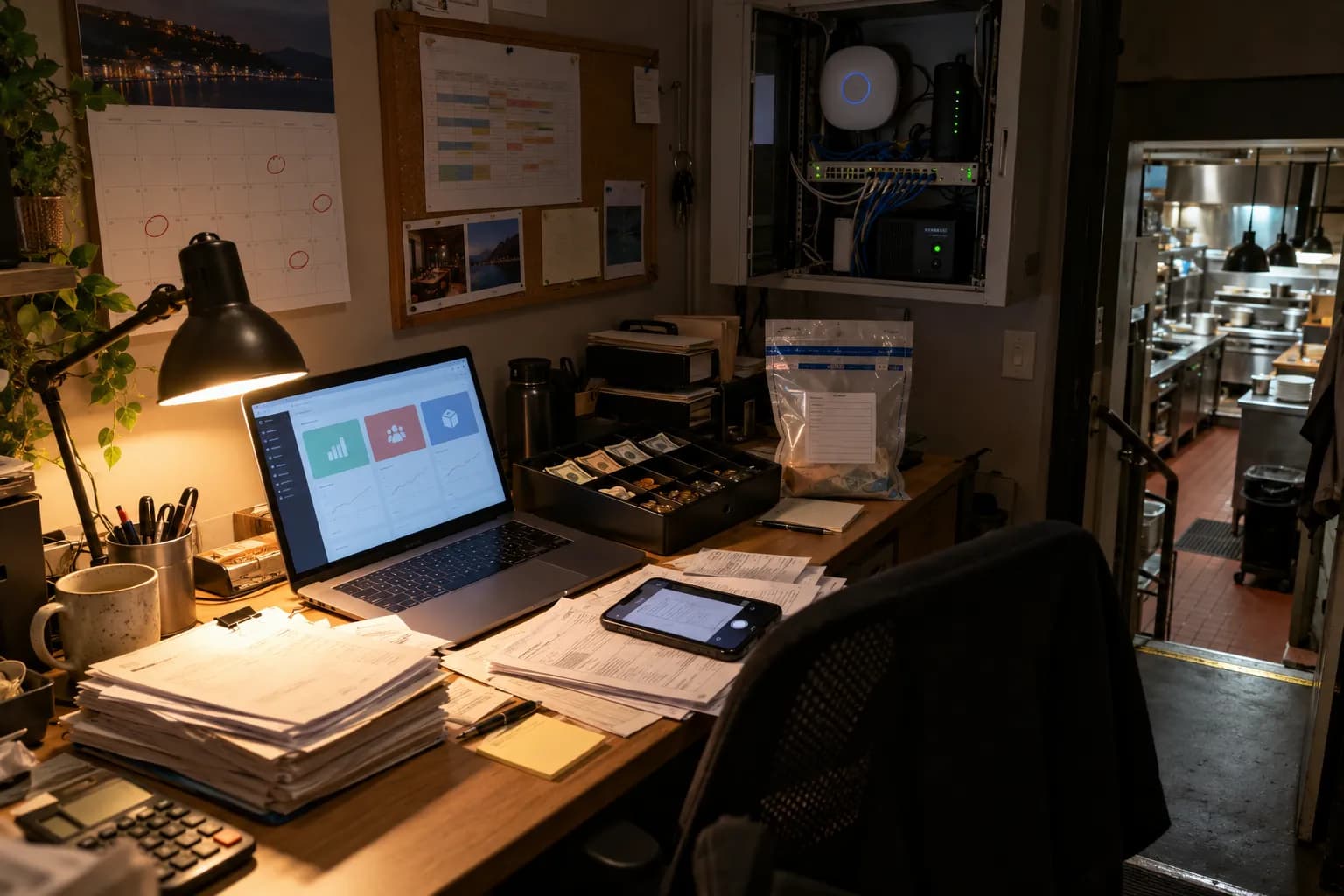
The small office over the kitchen after close: a laptop with the morning flash dashboard, a stack of invoices, the network closet with a UniFi gateway and a UPS, the wall calendar
The close

The back office & the close

Yesterday's labour at 08:00, last week's food cost on Monday, and the month's one day of profit tracked before the bookkeeper calls.

Restaurants Canada's model of a typical month: ten days of sales cover food, ten cover wages and payroll tax, two cover rent, seven cover everything else, and one day is pre-tax profit. Most owners learn whether the month made its one day from the bookkeeper, weeks later, because sales, labour and invoices sit in three systems, and the POS, scheduling, reservations, delivery, accounting and sensor subscriptions each cost roughly $60 to $400 a month. Meanwhile Ontario's minimum wage reached $17.95 on October 1, 2026, the schedule is still built on last week's gut feel, and the processor statement goes unopened.

The morning flash on your phone reads from the subscriptions you already pay for: yesterday's sales and labour percentage from the time clock, purchases-to-sales for the week, and on Monday last week's food cost after the Sunday count. Labour is forecast per shift before the schedule is published, a same-day cut after clock-in is flagged for three-hour exposure while a day-ahead cancellation is not, and expiring Smart Serve and food-handler cards show against the names on the floor. The effective card rate sits beside the quoted rate, so you can see whether the October 2024 interchange cut reached your statement; if it did not, the Code of Conduct lets you leave the contract without penalty.

On the dashboard
  • Sales, labour % and purchases-to-sales daily
  • Food and pour cost weekly after the count
  • Days of profit, month to date, vs the 30-day model
  • Three-hour-rule exposures and overtime
  • Effective processing rate vs quoted
  • Compliance countdowns and open work orders
Equipment it connects
  • Accounting (QuickBooks, Xero) with Dext or Hubdoc
  • Scheduling, time clock and payroll (7shifts, Push, Wagepoint)
  • Card processor statements
  • Business-insight dashboard with phone-first alerts
  • Network closet: UniFi gateway, LTE failover, UPS
  • Service-contract and compliance calendar
Open this area in the demo
Guided scenarios

Pick a real problem.
Watch it get solved.

Each scenario opens the live demo and walks you through it click by click: the exact control to press, what the dashboard is doing behind it, and what that means for your day. Press Start on any card to begin.

  1. Scenario 01 · Today
    3 min

    The walk-in at 01:14

    A loaded walk-in starts losing cold after close and nobody knows until the opener pulls the door at 07:00. By then the product has been in the danger zone for hours, the night call-out runs roughly $200 to $300 an hour, and the inspector's first question is where the log is.

    You learn at 01:14 instead of 07:00, the product that can be saved is saved, and the corrective action is documented without a clipboard. The contactor still fails and the technician still costs money.

    • Inventory, suppliers & cold storage
    • The kitchen line & prep
    Start this scenario
  2. Scenario 02 · Today
    4 min

    Friday's deposit lands short

    Missing-item refunds come out of the delivery payouts as negative adjustments, and the dispute windows pass unnoticed. An item 86'd on one app kept selling on the other two and the direct site. Friday looked fine on the tablets; the DoorDash deposit is $192 short, and nobody knows which orders.

    You see what the platforms took, dispute what is disputable inside the window, and fix the handoff that caused the rest. Accuracy improves over weeks through the bag check; nothing here guarantees a refund.

    • Delivery & takeout
    • The kitchen line & prep
    • The back office & the close
    Start this scenario
  3. Scenario 03 · Today
    4 min

    Patio Friday, rain Saturday, catering Sunday

    The patio paperwork lands in one spring window, and one certificate runs out before the season ends. Capacity jumps on a clear night and a 70 per cent rain chance takes it back on Saturday, with the shifts already published. A 120-head catering job with an e-Transfer deposit lives in an email thread.

    The last weekends of the season run with the paperwork done, Saturday's shift is released with notice, and Sunday's job leaves with a temperature record. Weather still decides Saturday.

    • Patio, events & catering
    • Front of house & POS
    • The back office & the close
    Start this scenario
  4. Scenario 04 · 2027
    3 min

    Eleven calls before the doors open

    The phone rings eleven times in the half hour before service and goes to voicemail, the Saturday 8-top vanishes with no card on file, and last week's two-star review sits unanswered because the owner was on the line.

    Fewer missed calls with your people still making the final call, large parties that carry a card, and a same-day reply that names the night it went wrong. Ratings move slowly, and only if the line does.

    • Front of house & POS
    • Marketing, reviews & loyalty
    Start this scenario
Live demo

Step inside
Harbour Street Kitchen

Walk every area, watch the alerts arrive, open the details behind them and run the guided scenarios yourself. It is a fictional operation built for the demo: nothing to install, no account, nothing of yours is collected.

Kitchener, Ontario · 72 seats · 60-seat patio · ghost brand on the same line · 3 delivery apps

Try the live demo4 guided scenarios · 7 areas
Harbour Street Kitchen · Overview · 16:42
Today and 2027

What the next two years
ask of your restaurant.

The pressures below come from the research behind this page: the rule, the date, the number. None of it is a forecast of what software will do. It is already on the calendar, or already on the invoice.

Today

01
One day of profit in thirty
On Restaurants Canada's model, one day of a month's sales is pre-tax profit. In the first quarter of 2026, 36 per cent of restaurants were at a loss or breaking even, against 12 per cent in 2019, and Dalhousie's Agri-Food Analytics Lab forecasts a net loss of roughly 4,000 restaurants this year. The margin for a bad week is one day wide, and most owners learn whether they made it from the bookkeeper.
02
The highest vacancy rate of any sector
Accommodation and food services ran a 4.6 per cent job vacancy rate in July 2026 against 2.8 across the economy. Ontario's minimum wage reached $17.95 on October 1, 2026, with CPP2, EI, EHT and WSIB on top; international students are capped at 24 hours a week off campus; and the three-hour rule pays a server sent home early, but not a shift cancelled the day before.
03
Beef, tariffs and the invoice keyed by hand
Beef jumped 19 per cent in the first quarter of 2025 and sits 23 per cent above its five-year average; Dalhousie expects food prices up 4 to 6 per cent in 2026. A 50 per cent US tariff on about $28 billion of Canadian goods took effect in August 2026, and Canada's counter-tariffs, in force since September 8, reach corrugated boxes, polyethylene bags, compressors and fans. Eight in ten operators have already raised menu prices; with invoices keyed by hand, a case-price change shows up weeks after it landed.
04
The clawback inside the payout
Half of Canadians who are tightening their budgets say delivery is the first thing they cut, so the orders that still come in carry more of the margin. British Columbia caps delivery fees at 20 per cent for good; Ontario's cap ended with the dine-in bans, so a 25 or 29 per cent plan is the going rate here. The error charges and their dispute windows sit inside the payout, where nobody looks until the deposit is short.

2027

01
After December 31, 2026
Any CEBA balance, up to $60,000 at 5 per cent, falls due in full on December 31, 2026, at the start of the dead months, so 2027 is debt service and refinancing for the restaurants that could not repay. The AODA compliance report for businesses with 20 or more employees is due the same day. Triple-net leases pass through property-tax increases, and the personal guarantee is the owner's house.
02
The phone agent that hands off
Only 1.5 per cent of accommodation and food services businesses used AI in the second quarter of 2025, the lowest of any industry, while Square's survey has 80 per cent of Canadian operators expecting automation to improve ticketing and payments within a year. The realistic 2027 agent for an Ontario independent answers the phone during the rush, takes bookings and catering enquiries, and hands off to a person.
03
Sensors, a KDS and the Mega Deduction
The Productivity Mega Deduction, announced in September 2026 and not yet law, would let a business expense investments made from September 15, 2026 right away. That would lower the after-tax cost of sensors, kitchen screens and network gear at a time when 51 per cent of operators say they are putting off maintenance and tariffs push up the price of parts. Confirm it with your accountant before you count on it.
04
Guests who ask an assistant where to eat
On BrightLocal's US panel, people using AI tools for local recommendations jumped from 6 to 45 per cent in a year; 68 per cent require four stars or better and 89 per cent expect an owner's reply. When a guest asks an assistant where to eat, it reads your Google profile, hours, menu and replies first. Those need to match on Google, the apps and your own site, and the replies need to sound like you.
A practical partner. A useful first step.

Let your expertise
travel further.

You know the menu, the room and the people. We connect the POS, the sensors, the tablets and the paperwork around them, one station at a time, and we say so if we are not the right people.

  1. 01
    Walk the operation
    We come in before service and walk the host stand, the line, the walk-in, the pass and the office with you, listening for the hold-up: the log nobody fills, the tablet nobody trusts, the payout nobody reconciles. We leave with a short list, not a proposal.
  2. 02
    Prove one connection
    We pilot one thing with your own equipment and your own people: sensors on the walk-in with the on-call rota, the three tablets into one feed, the reminder with a cancel link. A few weeks later you know whether it earns its place, from your readings, not our slides.
  3. 03
    Build on the result
    What earns its place stays and grows: the next unit, the compliance calendar, the morning flash, the phone agent. What does not, we switch off. Your POS stays your POS; the dashboard reads, tells and records.
Start with a real restaurant problem.

What should be
easier tomorrow?

A walk-in you check by opening the door at 07:00. A deposit that lands short and nobody knows why. A Saturday 8-top that never came.

Pick everything that applies

Takes you to the contact form with these notes filled in. A real person replies within one business day.